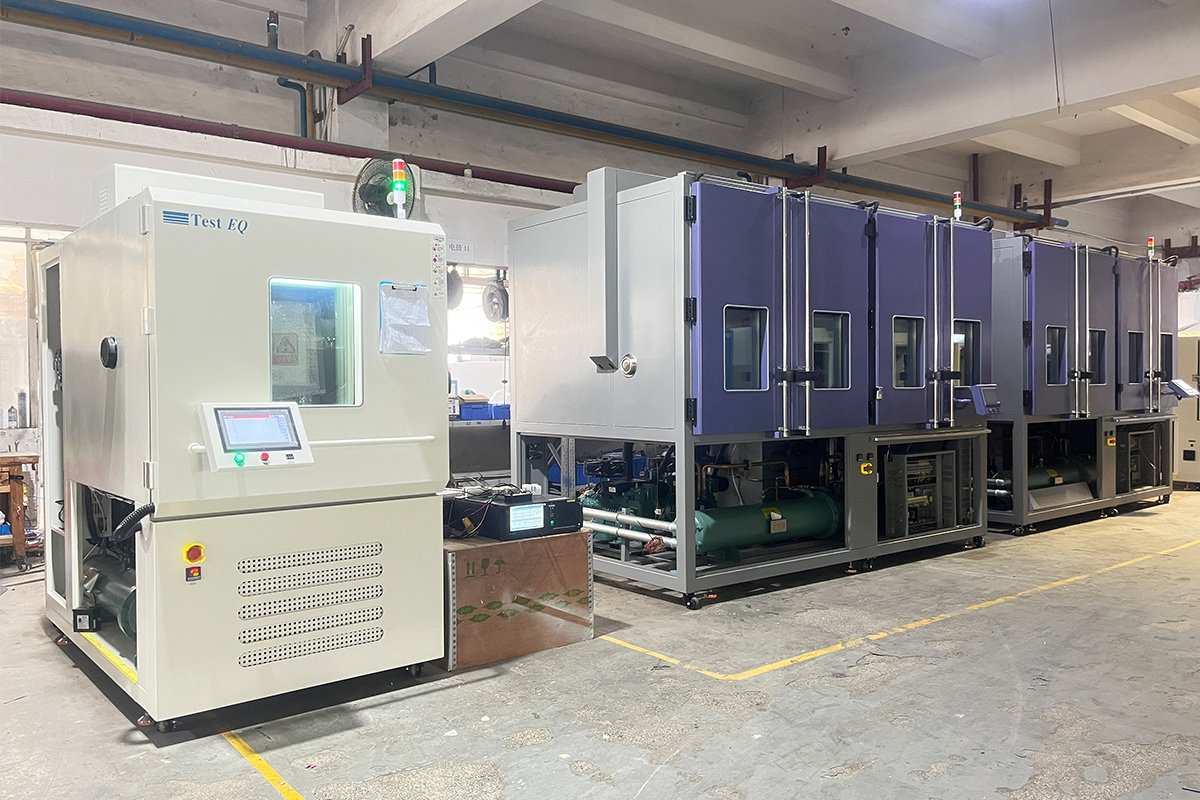
What Is HALT & HASS Reliability Testing?
HALT is a development-stage reliability engineering method that intentionally exposes a product to progressively increasing environmental and mechanical stresses.
The objective is not simply to determine whether a product passes a predefined specification. Instead, engineers use HALT to discover weaknesses, identify failure mechanisms, and understand how much stress the design can withstand.
HASS is a production-oriented screening method. Once the product design and its reliability margins are understood, controlled environmental stresses can be applied to production units to expose latent manufacturing defects before shipment.
The fundamental relationship is:
• HALT discovers design weaknesses and reliability margins.
• HASS screens production units for latent defects.
• HALT generates engineering information that can support HASS development.
• HASS applies controlled stress within validated product capability.
HALT and HASS should therefore not be treated as interchangeable qualification tests.
HALT vs HASS: What Is the Engineering Difference?
| Parameter | HALT | HASS |
|---|---|---|
| Primary Stage | Product development | Production |
| Main Objective | Discover design weaknesses | Screen manufacturing defects |
| Stress Approach | Progressive and exploratory | Controlled and repeatable |
| Main Output | Design margins and failure mechanisms | Screening effectiveness |
| Typical Product Condition | Prototype or development units | Production units |
| Main Engineering Result | Design improvement | Manufacturing improvement |
| Pass/Fail Focus | Not the primary objective | Screening criteria are established |
| Relationship | Establishes product knowledge | Uses validated reliability knowledge |
HALT is therefore mainly a learning and discovery process, while HASS is a production screening process.
How HALT Reliability Testing Works
HALT is normally conducted as a progressive stress discovery process rather than as a single fixed environmental condition.
Engineers gradually increase environmental and mechanical stresses while monitoring product functionality and failure behavior. The purpose is to identify the point at which the product begins to malfunction and the point at which permanent damage occurs.
A typical HALT workflow includes:
Establish the initial operating condition.
Apply low-temperature stress and progressively increase its severity.
Apply high-temperature stress and determine the corresponding operating and destruct limits.
Introduce vibration stress and monitor mechanical and electrical behavior.
Apply combined thermal and vibration stresses where appropriate.
Record functional failures, degradation, and physical damage.
Investigate the root cause of each failure.
Modify the design where necessary.
Repeat testing to verify the effectiveness of design improvements.
The resulting information can be used to establish design margins and improve product robustness before formal qualification or production release.
How HASS Reliability Screening Works
HASS is used after sufficient knowledge of the product's design margins and potential failure mechanisms has been established.
Unlike HALT, HASS is not intended to determine the ultimate capability of a new design. The objective is to apply controlled stresses that are severe enough to expose latent manufacturing defects while remaining within the validated capability of the product.
A typical HASS development process includes:
Establish product operating and failure margins through engineering testing.
Identify manufacturing defects that could affect reliability.
Define an appropriate screening stress level.
Verify that the stress can expose relevant latent defects.
Confirm that the screening process does not cause unacceptable product degradation.
Apply the approved profile consistently to production units.
Monitor screening failures and production trends.
Periodically review screening effectiveness.
Feed production failure information back into manufacturing and reliability improvement.
This makes HASS a manufacturing quality and reliability control method rather than a replacement for product qualification.
What Stresses Are Used in HALT and HASS?
The stress combination depends on the product architecture, failure mechanisms, reliability objectives, and test equipment.
| Stress | Engineering Purpose | Typical Concerns |
|---|---|---|
| High Temperature | Discover thermal operating and failure margins | Overheating, material degradation, component drift |
| Low Temperature | Discover low-temperature operating limits | Material embrittlement, startup failure, reduced performance |
| Rapid Temperature Change | Accelerate thermal expansion and contraction | Solder joint fatigue, interface stress, material mismatch |
| Vibration | Apply controlled mechanical stress to the DUT | Resonance, connector intermittency, structural fatigue |
| Combined Thermal and Vibration | Investigate coupled thermal and mechanical weaknesses | Interaction between thermal expansion, vibration, and mechanical stress |
The stress profile should be developed from the product's reliability risks rather than selected only because a chamber can generate a particular temperature or vibration level.
HALT/HASS Failure Mechanisms
One of the major benefits of accelerated reliability testing is the ability to expose failure mechanisms that may remain hidden during conventional testing.
Common failure mechanisms include:
• Solder joint cracking
• PCB and component fatigue
• Connector intermittency
• Fastener loosening
• Resonance-related structural damage
• Thermal expansion mismatch
• Material embrittlement
• Seal and enclosure degradation
• Wiring and cable fatigue
• Component parameter drift
• Manufacturing defects
• Assembly variation
Failure analysis should be performed after each significant failure so that the stress profile produces useful engineering information rather than simply generating a pass/fail result.
HALT/HASS Test Chamber Requirements
A HALT/HASS chamber normally combines environmental and mechanical stress capabilities.
Engineers should evaluate the complete system rather than temperature range alone.
Important requirements include:
Fast Temperature Transition
Rapid temperature changes can accelerate thermal expansion and contraction and help expose weaknesses associated with material interfaces, solder joints, seals, and electronic assemblies.
Wide Temperature Range
The available temperature range should support the intended stress discovery or screening profile.
Vibration Capability
For combined-stress testing, the vibration system should be evaluated for frequency range, acceleration capability, vibration configuration, and applicable degrees of freedom.
DUT Fixture
The fixture must securely hold the test article while allowing the required environmental and mechanical stresses to reach the DUT.
Monitoring and Data Acquisition
Temperature, vibration, electrical performance, functional status, and failure events should be monitored and recorded where required.
Integrated Control
The environmental and vibration systems should operate together when combined-stress testing is required.
Safety Protection
Safety interlocks, over-temperature protection, vibration protection, and DUT-specific safety measures are important for high-stress testing.
How to Select a HALT/HASS Test Chamber
Selecting a HALT/HASS chamber should begin with the required reliability test profile rather than chamber volume alone.
Temperature Range
Determine the required high- and low-temperature limits according to the product and intended stress profile.
Temperature Transition Rate
Evaluate the required temperature ramp capability when rapid thermal stress is part of the reliability program.
Vibration Configuration
Consider vibration direction, frequency range, acceleration capability, table configuration, and degrees of freedom.
DUT Size and Fixture
The chamber should accommodate the product, fixture, instrumentation, cables, and required mechanical movement.
Monitoring and Data Acquisition
Determine how many measurement channels are required and whether electrical performance, temperature, vibration, and failure events need to be recorded simultaneously.
Production Screening Requirements
For HASS applications, repeatability, cycle time, loading efficiency, fixture durability, maintenance, and throughput are particularly important.
Customization
Large DUTs, unusual fixtures, powered-product testing, special vibration profiles, or integrated monitoring may require a customized HALT/HASS system.
HALT/HASS Applications
Automotive Electronics
HALT and HASS can be applied to ECUs, BMS assemblies, sensors, power electronics, controllers, and other automotive electronic systems where thermal and mechanical reliability are important.
Semiconductor and Electronics
Applications include PCB assemblies, communication modules, power electronics, semiconductor-related equipment, and electronic control systems.
Aerospace and Defense
Avionics, communication systems, electronic control units, and mission-critical equipment may require accelerated reliability evaluation to identify design weaknesses before deployment.
Medical Devices
Electronic assemblies and electromechanical systems can use accelerated reliability testing to investigate potential design weaknesses and manufacturing variation.
Industrial Automation
Controllers, sensors, drives, power supplies, and industrial electronic assemblies can benefit from accelerated environmental and mechanical stress testing.
HALT/HASS and Conventional Environmental Testing
HALT and HASS serve different purposes from conventional environmental qualification tests.
| Test Method | Main Purpose | Typical Stage |
|---|---|---|
| HALT (Highly Accelerated Life Test) | Discover design weaknesses, failure mechanisms, and operating or destruct limits | R&D / Product Development |
| HASS (Highly Accelerated Stress Screening) | Screen production units for latent manufacturing defects | Production / Manufacturing |
| ESS (Environmental Stress Screening) | Identify latent defects and early-life failures through controlled environmental stress | Production / Quality Control |
| Thermal Cycling | Evaluate product resistance to repeated temperature changes and thermal expansion/contraction | Qualification / Reliability Testing |
| Thermal Shock | Evaluate product response to rapid transitions between extreme temperatures | Qualification / Reliability Testing |
A reliability program may use several of these methods because each provides different information about product robustness.
Standards and Reliability References
HALT and HASS are reliability methodologies rather than a single universal product qualification standard.
Applicable environmental and reliability references depend on the product, industry, customer specification, and reliability program.
Related references may include:
• IEC 60068 series for environmental testing methods
• JEDEC JESD22 series for semiconductor reliability testing
• AEC-Q100 for automotive integrated circuit qualification
• AEC-Q101 for discrete semiconductor qualification
• MIL-STD-810 for environmental engineering and laboratory testing of military equipment
These standards should be evaluated according to the actual product qualification or screening requirement. HALT/HASS stress profiles should not automatically be considered equivalent to a formal qualification method.
HALT/HASS Reliability Testing Workflow
Product Concept
↓
Prototype
↓
HALT
↓
Failure Detection
↓
Root Cause Analysis
↓
Design Improvement
↓
Reliability Verification
↓
Production
↓
HASS
↓
Production Screening
↓
Continuous Improvement
This workflow connects product development, reliability engineering, manufacturing quality, and continuous improvement.
Why Use a Dedicated HALT/HASS Test System?
A dedicated HALT/HASS system can integrate temperature stress, vibration, monitoring, control, and data acquisition into one test environment.
For engineers, the main value is not simply achieving extreme temperature or vibration. The system should provide repeatable and controllable stress conditions that support failure discovery, root-cause analysis, and production screening.
TestEQ provides environmental simulation and reliability testing systems that can be configured for temperature, rapid temperature transition, vibration, monitoring, DUT fixtures, and application-specific testing requirements.
For specific product dimensions, stress profiles, vibration requirements, and monitoring configurations, the chamber should be engineered around the actual test objective.
Frequently Asked Questions
1.What is HALT reliability testing?
HALT is a development-stage accelerated reliability method used to discover design weaknesses, failure mechanisms, and operating or destruct limits by applying progressively increasing stresses.
2.What is HASS testing?
HASS is a production screening method that uses controlled environmental and mechanical stresses to identify latent manufacturing defects before products are shipped.
3.What is the difference between HALT and HASS?
HALT is primarily used to discover design weaknesses and establish reliability margins, while HASS uses validated stress levels to screen production units for latent defects.
4.Is HALT a qualification test?
HALT is generally not intended to be a conventional pass/fail qualification test. Its main purpose is accelerated failure discovery and design improvement.
5.What stresses are used during HALT?
Common stresses include high temperature, low temperature, rapid temperature change, vibration, and combined thermal and vibration stresses.
6.How is the HASS stress level determined?
HASS stress levels should be developed from knowledge of product operating margins, failure mechanisms, and screening objectives. The selected stress must expose relevant defects without causing unacceptable product degradation.
7.What is the difference between HALT and ESS?
Both can be used to identify latent defects, but HALT is primarily a development-stage failure discovery methodology, while ESS is commonly used as a production screening approach.
8.What products can be tested using HALT/HASS?
Applications include automotive electronics, semiconductor equipment, aerospace electronics, defense systems, medical devices, industrial electronics, communication equipment, and other reliability-critical products.
9.What should I consider when selecting a HALT/HASS chamber?
Consider temperature range, temperature transition rate, vibration capability, DUT size, fixture configuration, monitoring, data acquisition, control integration, safety, cycle time, and customization requirements.
10.Can HALT/HASS testing be customized?
Yes. HALT/HASS systems can be configured around DUT dimensions, thermal profiles, vibration requirements, fixtures, instrumentation, monitoring channels, and application-specific reliability objectives.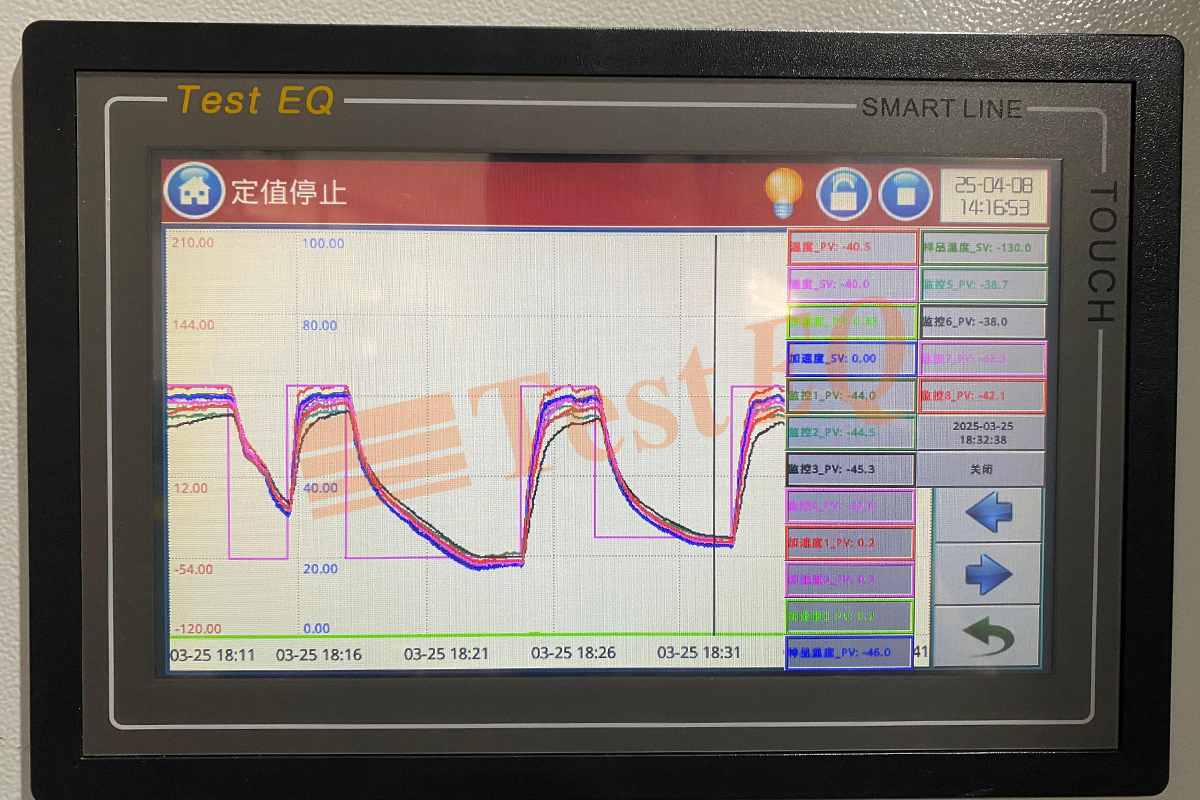
Internal Linking Module
Related HALT & HASS Testing Equipment
Explore TestEQ environmental and reliability testing systems designed for accelerated stress testing, thermal cycling, and application-specific reliability programs.
A combined environmental and vibration testing system designed for accelerated failure discovery and production stress screening.
Provides controlled temperature cycling for evaluating thermal stress, material response, electronic assemblies, and reliability performance.
Designed to apply controlled mechanical vibration for evaluating structural, electronic, and mechanical reliability under dynamic conditions.
Related Reliability Testing Standards
Explore related environmental and reliability testing standards commonly considered alongside HALT and HASS programs.
An international series covering environmental testing methods including temperature, humidity, vibration, shock, and other environmental stresses.
A semiconductor reliability testing series covering environmental, mechanical, and accelerated reliability test methods for electronic components.
A widely referenced military environmental testing framework covering temperature, altitude, humidity, vibration, shock, and other environmental conditions.
Related HALT & HASS Resources
Read related technical resources to better understand HALT, HASS, accelerated reliability testing, and environmental stress testing.
Learn how HALT-HASS chambers combine temperature, vibration, control, monitoring, and DUT fixtures for accelerated reliability testing.
Compare HALT and HASS testing objectives, development stages, stress approaches, and applications in reliability engineering.
Understand how environmental stress screening identifies latent manufacturing defects and supports production reliability improvement.
CTA
Need a HALT & HASS Testing System?
Planning a HALT or HASS reliability testing program? TestEQ can help evaluate your DUT requirements and develop a suitable environmental and vibration testing configuration.
Share your DUT dimensions, weight, temperature range, temperature transition rate, vibration requirements, fixture configuration, and monitoring needs with our engineers.
Get a testing system recommendation based on your application and reliability objectives.