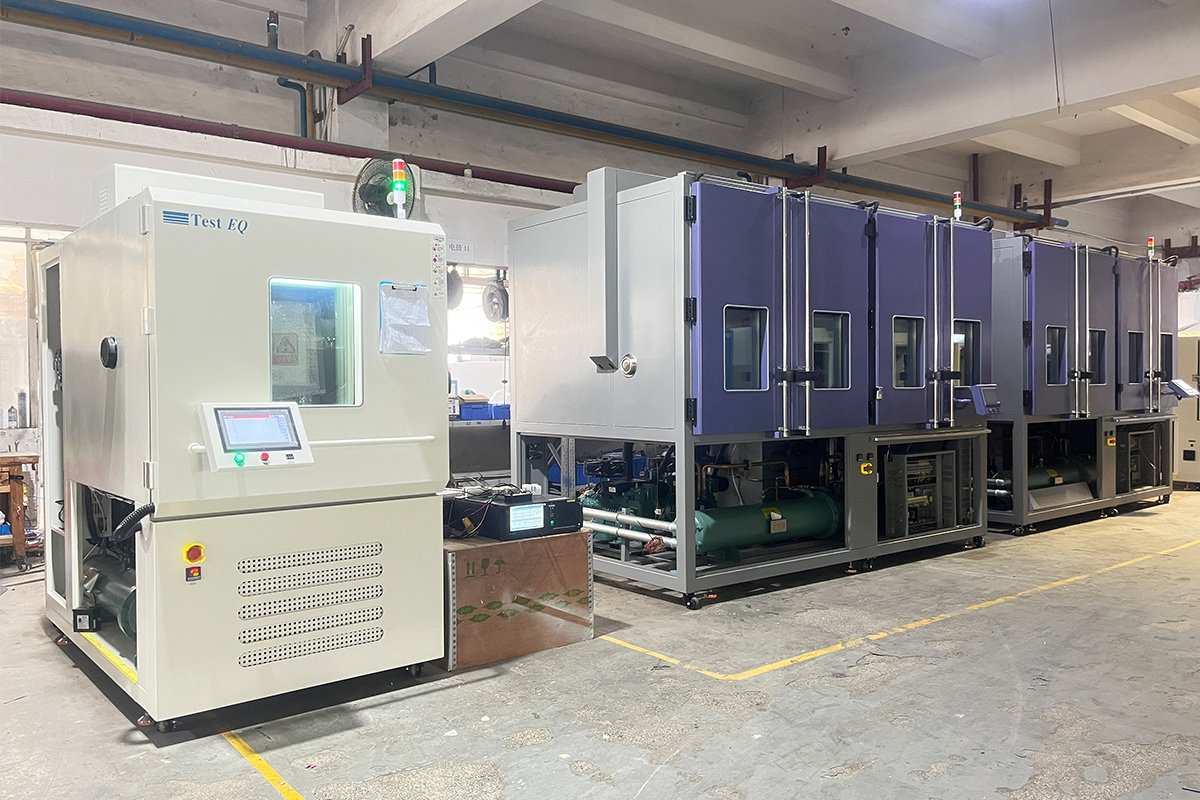
What Is the MIL-STD-810 Altitude Test?
The MIL-STD-810 altitude test simulates reduced atmospheric pressure to evaluate how equipment performs under high-altitude conditions.
Reduced atmospheric pressure can affect:
• Heat transfer and cooling performance
• Electrical insulation and arcing behavior
• Seals and pressure-sensitive structures
• Motors, fans, and moving components
• Batteries and energy-storage systems
• Sensors and electronic circuits
• Communication and avionics equipment
• Materials and enclosed assemblies
The objective is to determine whether the test item can maintain the required functional and physical performance under the specified low-pressure environment.
MIL-STD-810 altitude testing is commonly relevant to aerospace equipment, avionics, military electronics, UAV systems, communication equipment, automotive electronics, battery systems, and other products whose lifecycle includes high-altitude exposure.
Which MIL-STD-810 Method Covers Altitude Testing?
Altitude testing is covered by:
MIL-STD-810H Method 500.6 – Low Pressure (Altitude)
Method 500.6 addresses low-pressure environments associated with altitude and can also address rapid pressure changes when these conditions are relevant to the product lifecycle.
The method should not be interpreted as a one-size-fits-all test specification. MIL-STD-810 requires engineering tailoring so that the selected procedure, altitude, pressure, duration, temperature, and other conditions represent the intended operational or transportation environment.
MIL-STD-810 Method 500.6 Test Procedures
Method 500.6 uses different procedures according to the intended exposure scenario.
Storage / Air Transport
Procedure I evaluates equipment that may be stored or transported at high altitude.
Typical considerations include:
Packaging and enclosure integrity
Structural deformation
Seal performance
Material expansion
Functional condition after exposure
Effects of reduced atmospheric pressure
The test configuration should represent the relevant storage or transportation condition defined by the test plan.
Operation / Air Carriage
Procedure II evaluates equipment while it is operating under the specified low-pressure condition.
Engineers may monitor:
Startup performance
Electrical operation
Functional stability
Cooling performance
Communication performance
Abnormal heating
Mechanical behavior
System alarms or failures
For actively operating equipment, the test profile should reflect the expected altitude and operational environment.
Rapid Decompression
Rapid decompression testing evaluates equipment subjected to a rapid reduction in pressure.
This procedure can be relevant to:
Aircraft equipment
Pressurized compartments
Aerospace systems
Airborne electronics
Equipment whose failure could create a safety hazard
The pressure-time profile should be established from the applicable test requirement rather than assuming a universal decompression rate.
MIL-STD-810 Altitude Test Requirements
The most important test parameters should be established during the tailoring process.
| Engineering Parameter | What Should Be Defined |
|---|---|
| Test Altitude | Required simulated altitude for the qualification test |
| Corresponding Pressure | Target chamber pressure corresponding to the specified altitude |
| Altitude Change Rate | Required ascent, descent, or pressure transition profile |
| Test Procedure | Applicable procedure, such as storage, operation, air carriage, or rapid decompression |
| Test Duration | Required exposure time at the specified altitude and pressure condition |
| Temperature | Required temperature condition when temperature control is part of the test profile |
| Humidity | Required humidity condition when humidity control is applicable |
| Test Item Configuration | DUT configuration during storage, transportation, or operational testing |
| Instrumentation | Required monitoring of pressure, temperature, humidity, DUT status, and other critical parameters |
| Acceptance Criteria | Functional, electrical, mechanical, and physical performance requirements after testing |
| Data Recording | Continuous recording of pressure/altitude, temperature, humidity, and relevant test-item data throughout the test |
| Post-Test Inspection | Functional verification, visual inspection, and physical evaluation after exposure |
These parameters should be defined before selecting or configuring the test equipment.
Why Tailoring Is Important in MIL-STD-810 Altitude Testing
MIL-STD-810 is an environmental engineering and laboratory testing standard rather than a single fixed qualification profile.
For altitude testing, the engineering team should determine:
Where the product will be stored, transported, or operated.
The maximum credible altitude exposure.
The corresponding atmospheric pressure.
Whether the equipment operates during exposure.
Whether rapid decompression is relevant.
Whether temperature and humidity must be controlled simultaneously.
How long the product must remain at the specified condition.
What functional and physical acceptance criteria apply.
This approach prevents a common mistake: selecting a chamber based only on its advertised maximum altitude without confirming whether the pressure profile, temperature capability, test volume, instrumentation, and control system match the actual qualification plan.
Altitude and Atmospheric Pressure
Altitude testing is based on atmospheric pressure rather than altitude alone.
As altitude increases, atmospheric pressure decreases. Therefore, an altitude test chamber must convert the required altitude condition into the corresponding pressure target and reproduce the specified pressure-versus-time profile.
For engineering specifications, procurement teams should therefore define both:
Required altitude range + corresponding pressure range
rather than specifying only a maximum altitude.
This is particularly important when comparing altitude chambers from different manufacturers.
What Does an Altitude Test Evaluate?
MIL-STD-810 altitude testing can reveal failure mechanisms associated with reduced atmospheric pressure.
Thermal Management
Lower air density can reduce convective heat transfer. Equipment that performs normally at sea level may experience increased component temperature or reduced cooling performance at altitude.
Electrical Insulation
Reduced pressure can affect electrical insulation and increase the risk of arcing or other pressure-dependent electrical behavior in susceptible systems.
Mechanical and Structural Integrity
Pressure differences can affect sealed housings, enclosures, containers, seals, and pressure-sensitive components.
Battery and Energy Storage Systems
Reduced atmospheric pressure can influence pressure-sensitive battery systems and should be evaluated according to the product-specific qualification plan and applicable safety requirements.
Electronic and Communication Systems
Avionics, sensors, communication modules, control electronics, and other powered equipment can be evaluated for functional stability during low-pressure operation.
MIL-STD-810 Altitude Test Method Overview
MIL-STD-810 includes several environmental test methods. Altitude testing is mainly performed according to:
MIL-STD-810 Method 500 – Low Pressure (Altitude)
The latest commonly referenced version is:
MIL-STD-810H Method 500.6
The test evaluates equipment performance under simulated altitude environments.
The main test procedures include:
Storage / Transportation
This procedure evaluates equipment during transportation or storage at high altitude conditions.
Typical evaluation includes:
Packaging integrity
Mechanical deformation
Material expansion
Seal performance
Operation
This procedure verifies whether equipment can operate normally under low-pressure conditions.
Engineers evaluate:
Startup performance
Electrical operation
Functional stability
Cooling capability
Communication reliability
Rapid Decompression
Rapid decompression testing simulates sudden pressure loss scenarios.
Typical applications:
Aircraft cabins
Aerospace systems
Pressurized equipment
The test evaluates whether components can survive sudden atmospheric pressure changes.
MIL-STD-810 Altitude Test vs RTCA DO-160 Altitude Test
Both MIL-STD-810 and RTCA DO-160 include altitude simulation testing, but they serve different industries and qualification purposes.
| Comparison | MIL-STD-810 Altitude Test | RTCA DO-160 Altitude Test |
|---|---|---|
| Main Application | Military and defense equipment | Commercial aircraft avionics |
| Standard Organization | U.S. Department of Defense | RTCA / EUROCAE |
| Typical Products | Military electronics, vehicles, communication systems | Aircraft electronic equipment |
| Altitude Testing Method | Method 500 Low Pressure (Altitude) | Section 4 Altitude |
| Focus | Battlefield and military environmental reliability | Aircraft operational qualification |
| Industries | Defense, aerospace, automotive, electronics | Civil aviation and avionics |
MIL-STD-810 Altitude Test vs Vacuum Testing
MIL-STD-810 altitude testing should not automatically be treated as the same as high-vacuum or thermal-vacuum testing.
| Factor | MIL-STD-810 Altitude Test | Thermal Vacuum Test |
|---|---|---|
| Primary Objective | Simulate altitude-related low pressure | Simulate a space-like thermal vacuum environment |
| Typical Environment | High-altitude atmospheric conditions | High or ultra-high vacuum with controlled thermal conditions |
| Typical Applications | Aircraft, military equipment, avionics, electronics | Spacecraft, satellite hardware, space components |
| Pressure Objective | Pressure corresponding to the specified altitude | Vacuum level defined by space test requirements |
| Thermal Control | Optional or specified by the test plan | Usually a major part of the test |
| Main Standard Examples | MIL-STD-810 Method 500.6 | NASA, ECSS, and customer-specific space requirements |
The correct chamber should therefore be selected according to the required environmental profile rather than using the terms “altitude” and “vacuum” interchangeably.
How to Select an Altitude Test Chamber for MIL-STD-810
Before requesting a quotation, define the engineering requirements rather than starting with chamber volume alone.
Key specification items include:
Required Altitude
Define the maximum simulated altitude required by the qualification plan.
Corresponding Pressure
Specify the target pressure range and control accuracy.
Pressure Ramp
Define the required pressurization, depressurization, and rapid decompression profile.
Temperature Integration
Determine whether the test requires temperature control in addition to altitude simulation.
Test Volume
Specify the dimensions and weight of the DUT, fixture, cables, instrumentation, and access requirements.
Operational Testing
Confirm whether the DUT must operate continuously during low-pressure exposure.
Data Acquisition
Define required pressure, temperature, humidity, electrical, and product monitoring channels.
Safety and Interlocks
For powered equipment, batteries, pressurized assemblies, or other safety-sensitive DUTs, the chamber design should include appropriate protection and interlock requirements.
For equipment selection and customized chamber configuration, see TestEQ's MIL-STD-810 altitude test chamber solution.
Industries Using MIL-STD-810 Altitude Testing
Aerospace and Avionics
Altitude testing can be used for:
• Avionics modules
• Aircraft electronics
• Flight-control electronics
• Navigation equipment
• Communication systems
• UAV equipment
Defense
Typical applications include:
• Military electronics
• Portable equipment
• Communication systems
• Electronic control units
• Defense subsystems
Automotive and EV
Altitude simulation may be used to evaluate:
• Vehicle electronic control units
• Sensors
• Power electronics
• Battery systems
• High-altitude vehicle components
Electronics and Semiconductor Systems
Low-pressure testing can support reliability evaluation of:
• Electronic assemblies
• Sensors
• Control modules
• Semiconductor-related equipment
• Communication electronics
What Data Should Be Recorded During an Altitude Test?
A reliable altitude qualification program should record environmental conditions throughout the test.
Depending on the test plan, useful data includes:
• Chamber pressure or simulated altitude versus time
• Chamber temperature versus time
• Test-item temperature versus time
• Humidity versus time when controlled
• Product operating status
• Functional alarms
• Electrical measurements
• Test start and end conditions
Continuous data recording provides engineers with evidence that the specified environmental profile was actually achieved and maintained.
Why Choose TestEQ for MIL-STD-810 Testing Equipment?
TestEQ provides environmental simulation systems for low-pressure and altitude qualification applications.
Depending on the test requirement, an altitude test system can be configured with:
• Controlled low-pressure simulation
• Programmable pressure profiles
• Temperature control
• Humidity control where applicable
• Data acquisition and monitoring
• Customized chamber dimensions
• DUT operating interfaces
• Automated test profiles
• Safety interlocks
• Validation and engineering support
The final configuration should be based on the customer's altitude, pressure, temperature, test duration, DUT size, operating condition, and applicable qualification requirements.
Engineering Takeaway
MIL-STD-810 altitude testing is fundamentally a low-pressure environmental qualification test.
The critical engineering variables are not simply “maximum altitude” or “vacuum level.” A complete qualification profile should define:
Altitude + Pressure + Pressure Ramp + Temperature + Test Duration + DUT Configuration + Functional Monitoring + Acceptance Criteria
For engineers and procurement teams, defining these requirements before selecting the chamber is the most reliable way to ensure that the equipment can reproduce the intended MIL-STD-810 test environment.
FAQ: MIL-STD-810 Altitude Test
1.What is MIL-STD-810 altitude testing?
MIL-STD-810 altitude testing evaluates equipment under reduced atmospheric pressure corresponding to a specified high-altitude environment. In MIL-STD-810H, this is addressed by Method 500.6, Low Pressure (Altitude).
2.Which MIL-STD-810 method covers altitude testing?
MIL-STD-810H Method 500.6 covers Low Pressure (Altitude) testing.
3.Does MIL-STD-810 specify one fixed altitude?
No. The altitude and corresponding pressure must be established through engineering tailoring based on the product lifecycle, intended environment, and applicable test requirements.
4.What are the MIL-STD-810 altitude test procedures?
Method 500.6 includes procedures addressing storage/air transport, operation/air carriage, and rapid decompression scenarios, depending on the applicable test plan.
5.What is the difference between altitude testing and vacuum testing?
Altitude testing simulates reduced atmospheric pressure corresponding to a high-altitude environment. Vacuum testing can involve substantially lower pressures and may be intended for applications such as thermal-vacuum testing of space hardware.
6.Can altitude testing be combined with temperature testing?
Yes. When required by the qualification plan, altitude simulation can be combined with controlled temperature and other environmental conditions.
7.What products require MIL-STD-810 altitude testing?
Applications can include aircraft equipment, avionics, UAV systems, military electronics, communication equipment, automotive electronics, battery systems, and other products exposed to high-altitude environments.
8.What should be specified when purchasing an altitude test chamber?
At minimum, define the required altitude and pressure range, pressure ramp rate, temperature range if applicable, chamber volume, DUT operating condition, data acquisition requirements, safety requirements, and applicable test standards.
9.Does passing a MIL-STD-810 altitude test mean a product is universally MIL-STD-810 compliant?
No. MIL-STD-810 compliance is determined by the applicable environmental requirements and tailored test program. Passing Method 500.6 alone does not establish compliance with every MIL-STD-810 environmental method.
Internal Linking Module
Recommended Test Equipment
Help engineers and purchasing personnel quickly select suitable environmental simulation equipment for MIL-STD-810 altitude testing.
TestEQ altitude test chambers simulate high-altitude low-pressure environments for aerospace, defense, electronics and reliability qualification testing. Customized pressure and temperature control solutions are available for MIL-STD-810 applications.
Integrated temperature and altitude simulation chambers combine low-pressure environments with temperature control to evaluate avionics, aerospace components and electronic systems under extreme conditions.
Thermal vacuum chambers simulate space-like vacuum and temperature conditions for satellite components, aerospace electronics and advanced reliability testing programs.
Related Environmental Testing Standards
Gain a deep understanding of the relevant testing standards of MIL-STD-810 to help engineers establish a complete reliability verification system.
Explore MIL-STD-810 test methods covering altitude, temperature, humidity, vibration, shock and other environmental qualification requirements for military and aerospace equipment.
RTCA DO-160 defines environmental qualification requirements for airborne equipment, including altitude simulation, temperature variation, vibration and EMI testing.
IEC 60068 provides internationally recognized environmental testing methods for electronic products, including temperature, humidity, shock and vibration reliability testing.
Technical Resources & Engineering Guides
We provide engineering and technical expertise to help clients select testing solutions and evaluate equipment.
Learn how altitude testing simulates high-altitude low-pressure environments and why it is critical for aerospace, military and electronic product reliability verification.
A practical selection guide for engineers and purchasing teams comparing chamber specifications, testing requirements, standards compliance and customization options.
Understand aerospace reliability testing requirements, including altitude, temperature, vibration and thermal cycling tests for aircraft components and avionics systems.
CTA
Need a MIL-STD-810 Altitude Test Chamber Solution?
Reliable altitude simulation requires precise pressure control, stable environmental performance, and equipment designed for your qualification requirements.
TestEQ provides customized MIL-STD-810 altitude test chambers for aerospace, defense, automotive electronics, semiconductor and research applications.
Our engineering team supports customers with:
✓ Altitude simulation chamber selection
✓ MIL-STD-810 Method 500 testing requirements
✓ Temperature-altitude combined testing solutions
✓ Customized chamber design and validation support
Whether you are developing aerospace electronics, military equipment, EV components, or advanced electronic systems, TestEQ can help you build a reliable environmental testing solution.
Contact TestEQ Engineering Team Today — Get a Customized Altitude Test Chamber Proposal