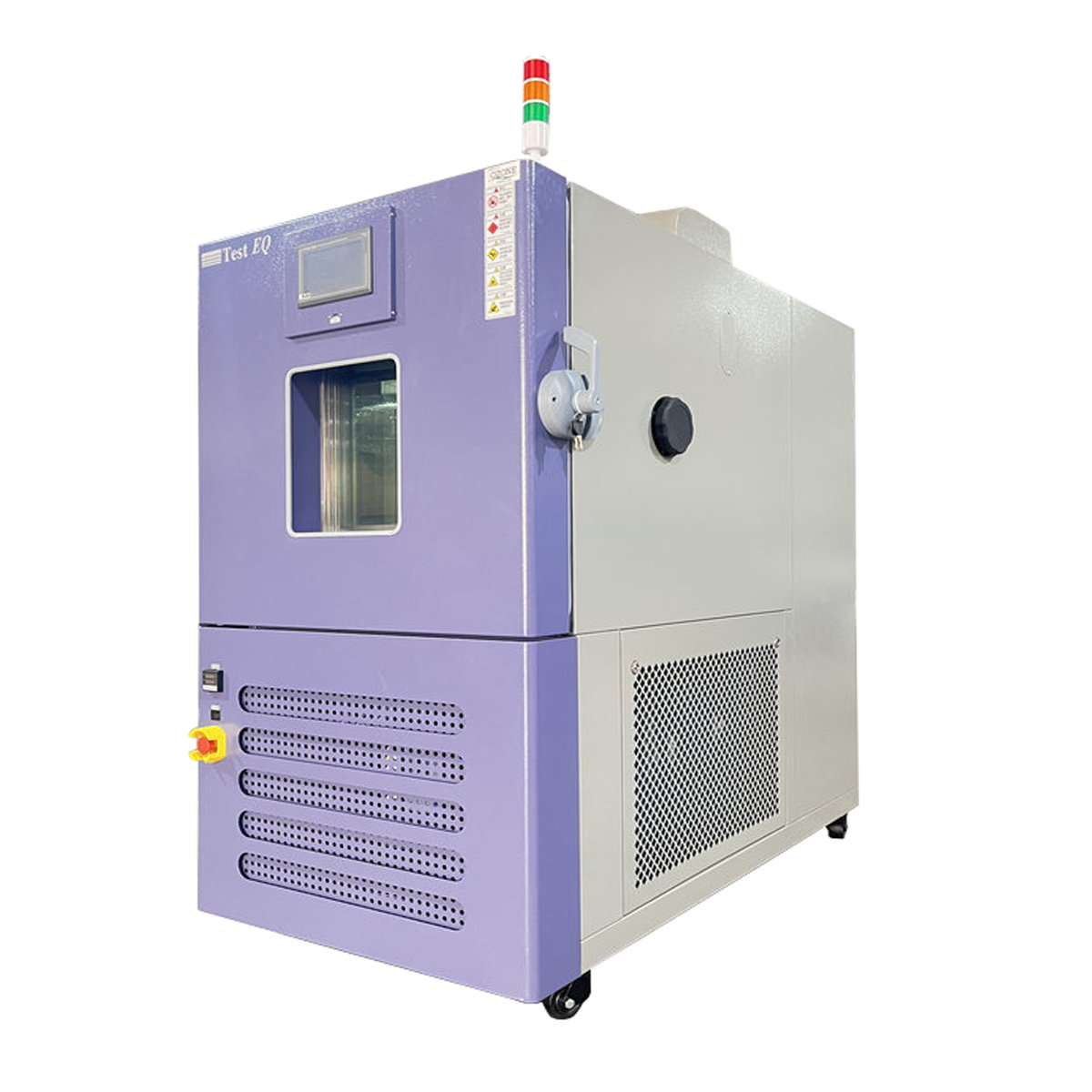
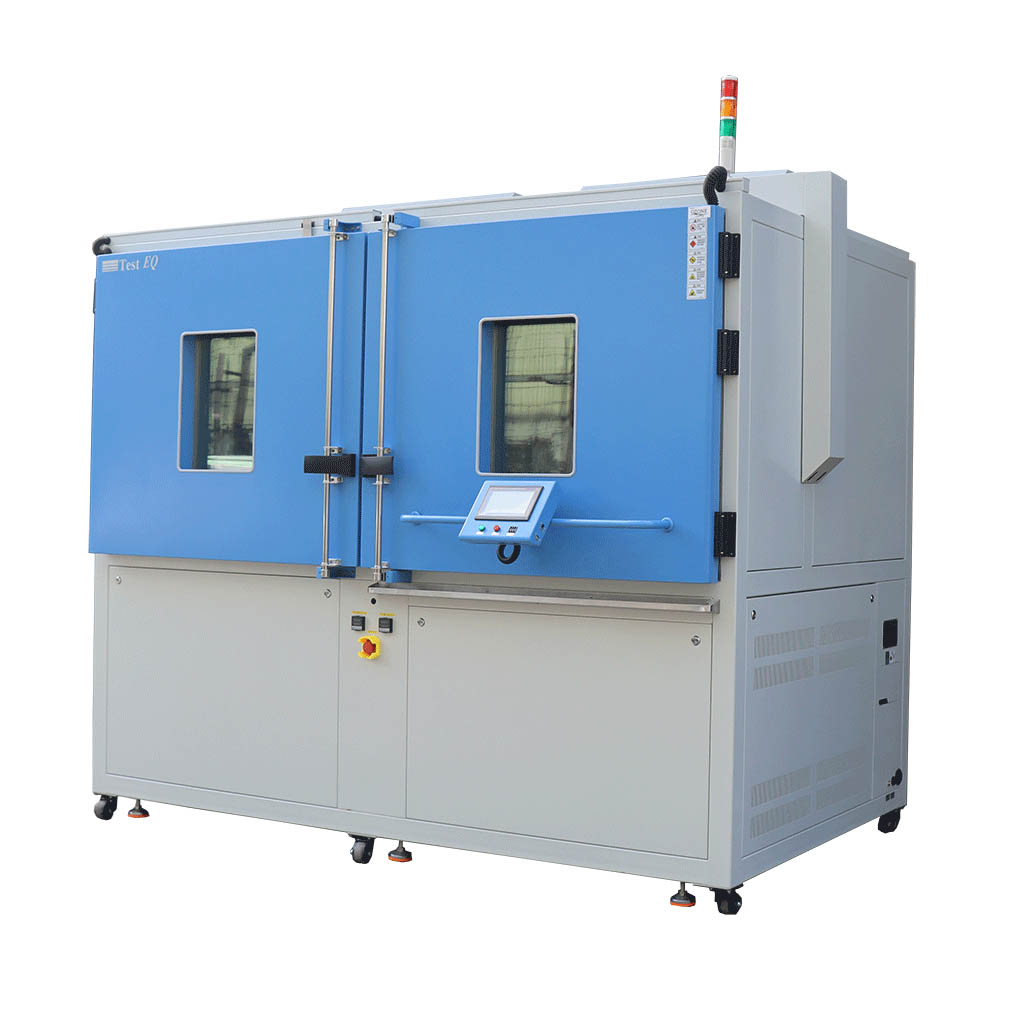
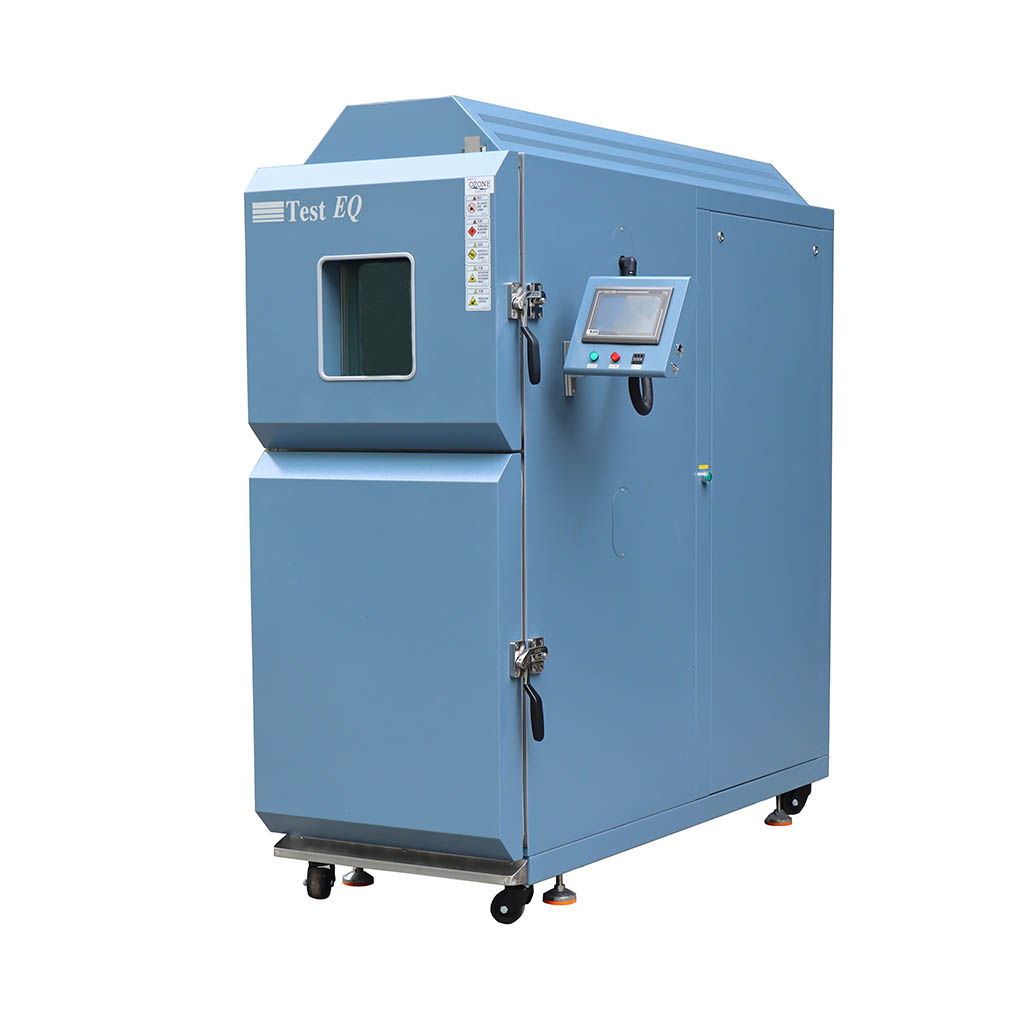
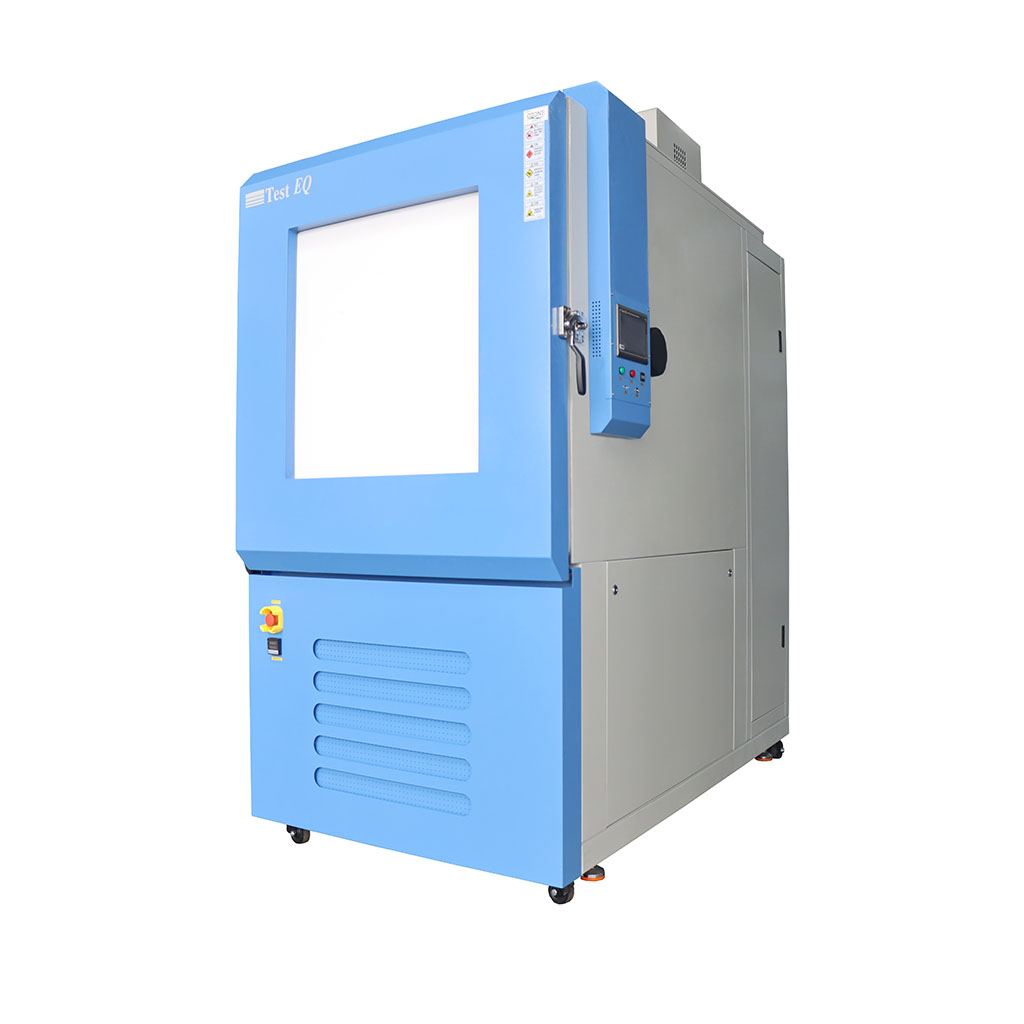
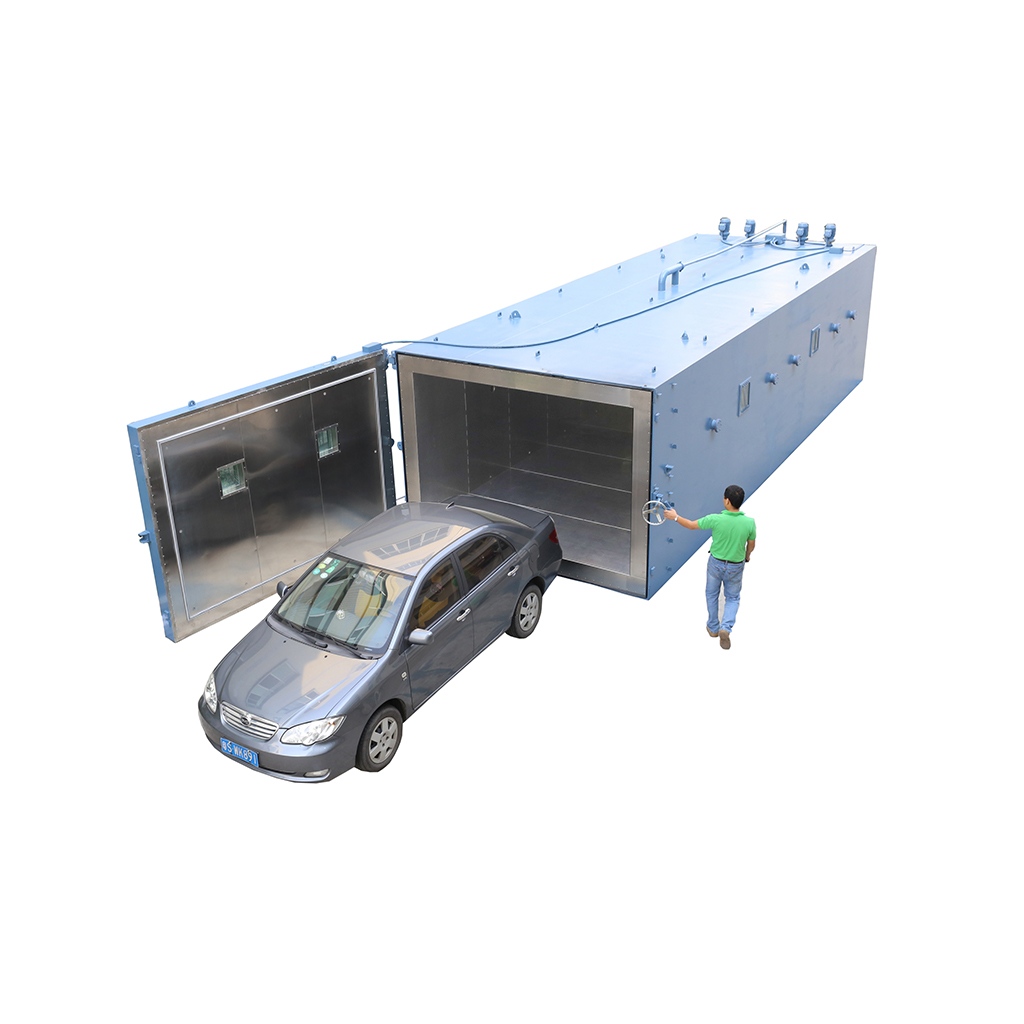
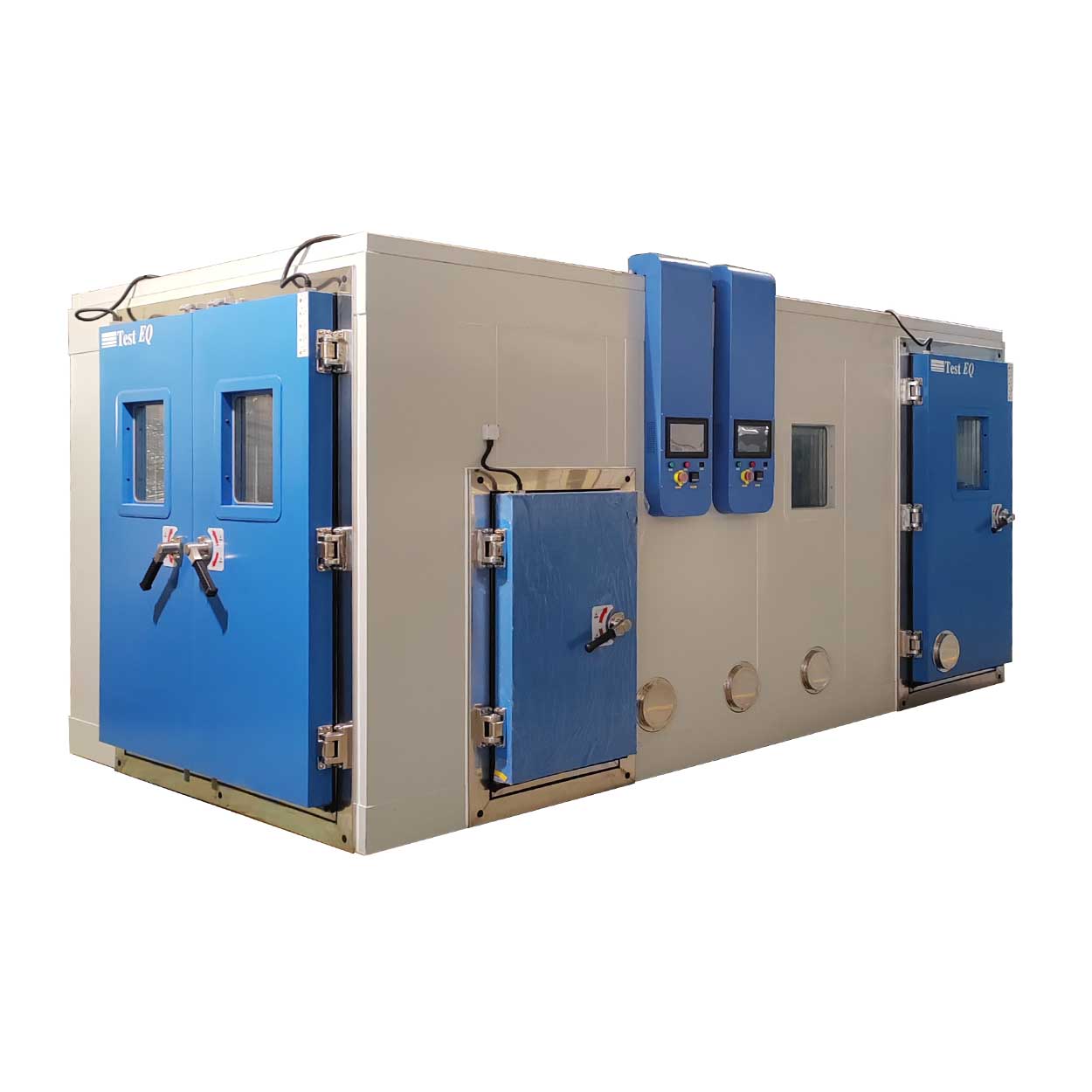
Temperature Vibration Test Chamber for Thermal-Mechanical Reliability Testing
A Temperature Vibration Test Chamber combines controlled temperature conditions with mechanical vibration to evaluate product reliability under simultaneous thermal and dynamic stress.
This type of testing is useful when a product must maintain structural and functional performance while temperature changes and mechanical excitation occur at the same time.
TestEQ provides temperature vibration systems for aerospace, automotive, EV, electronics, semiconductor and industrial applications.
What Is a Temperature Vibration Test Chamber?
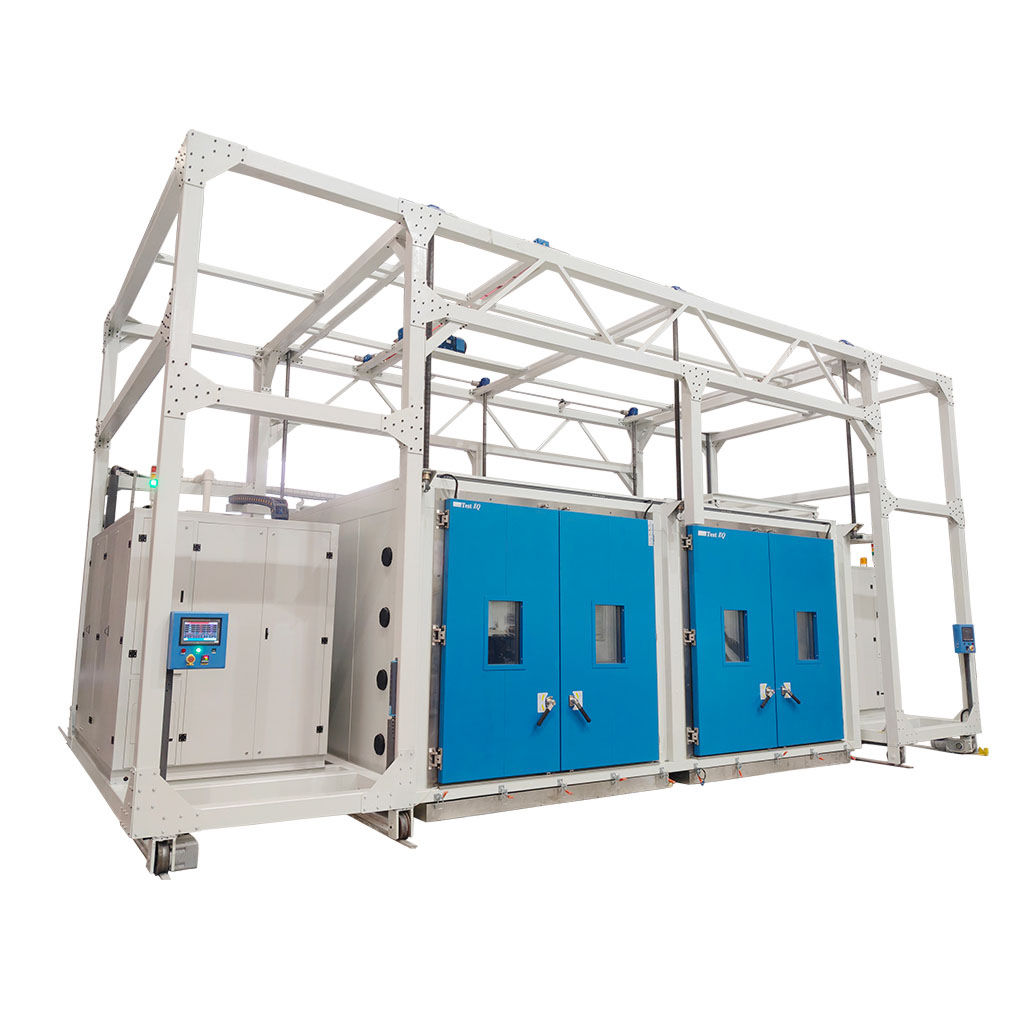
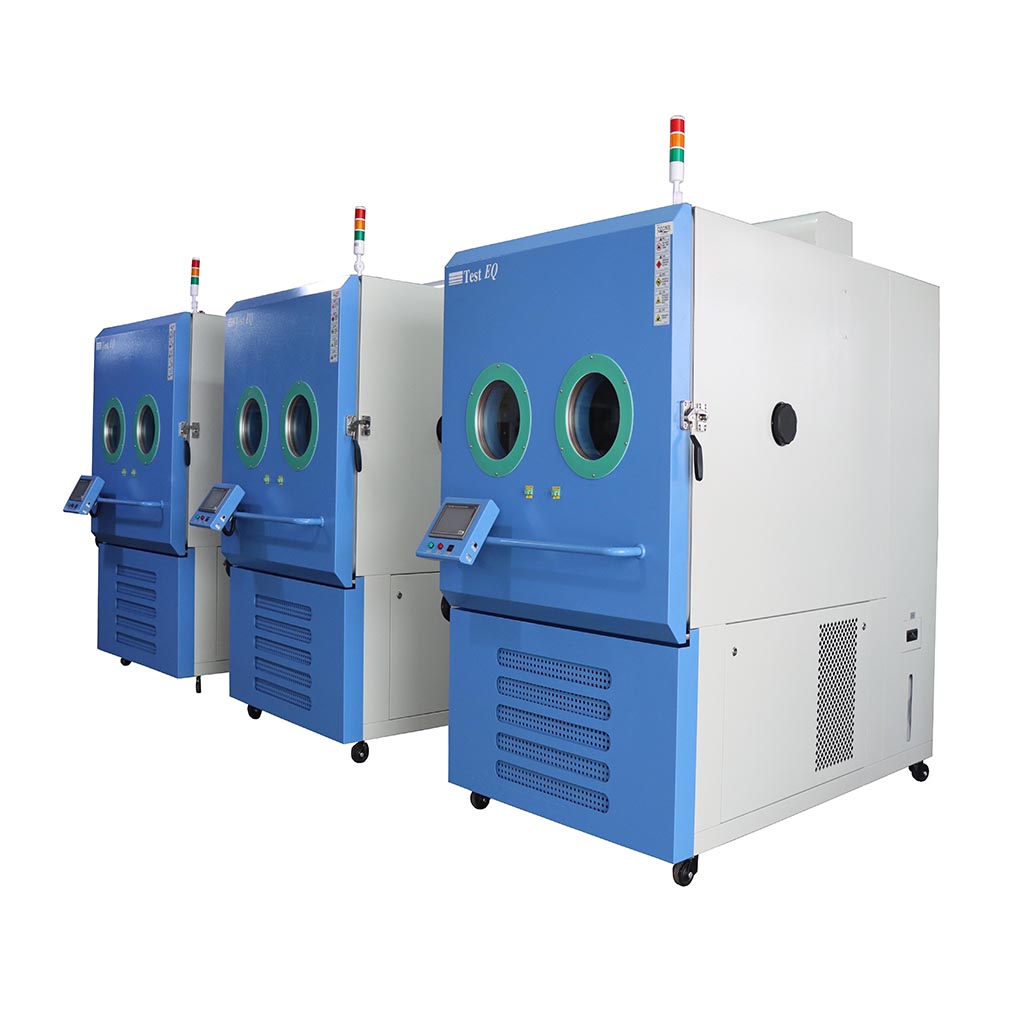
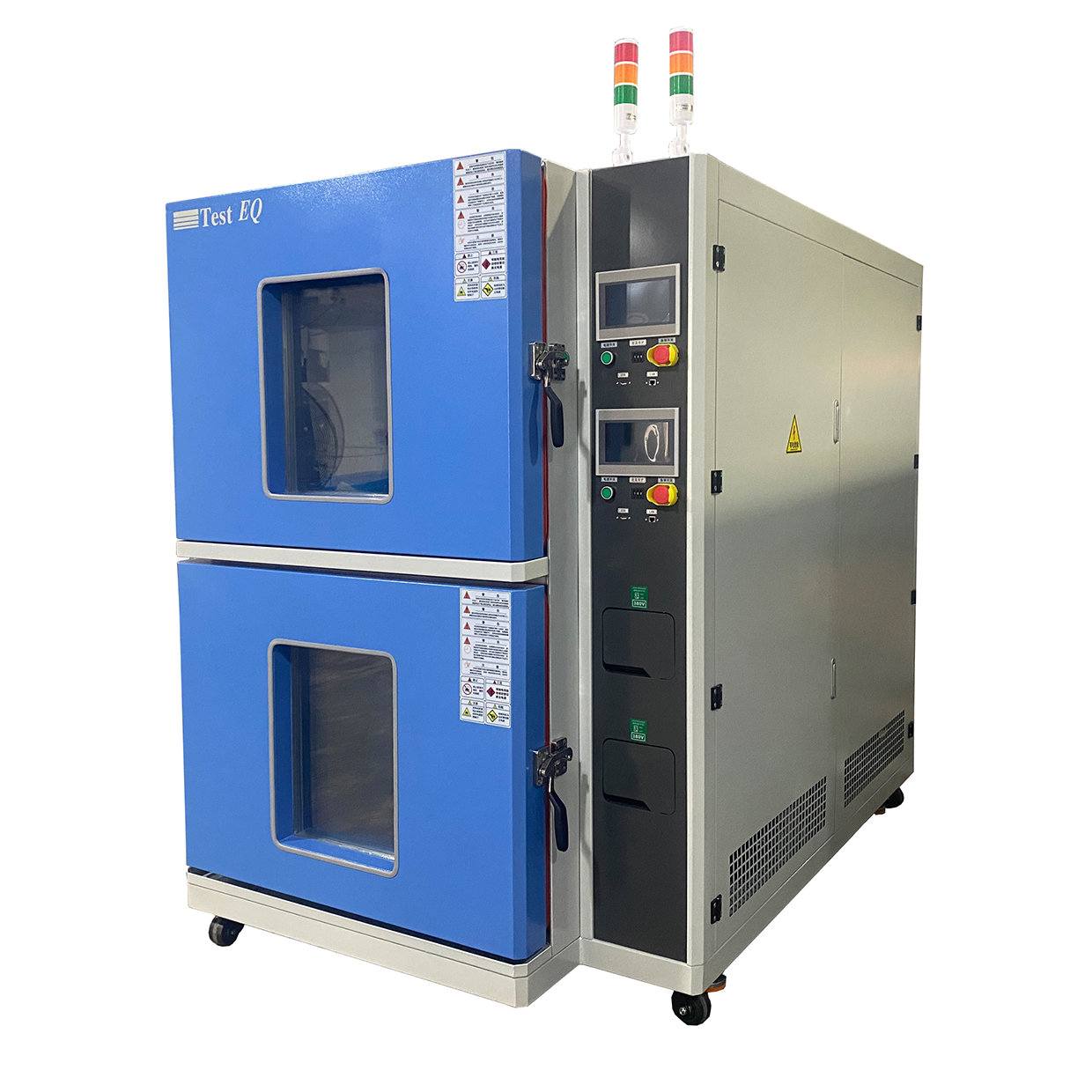
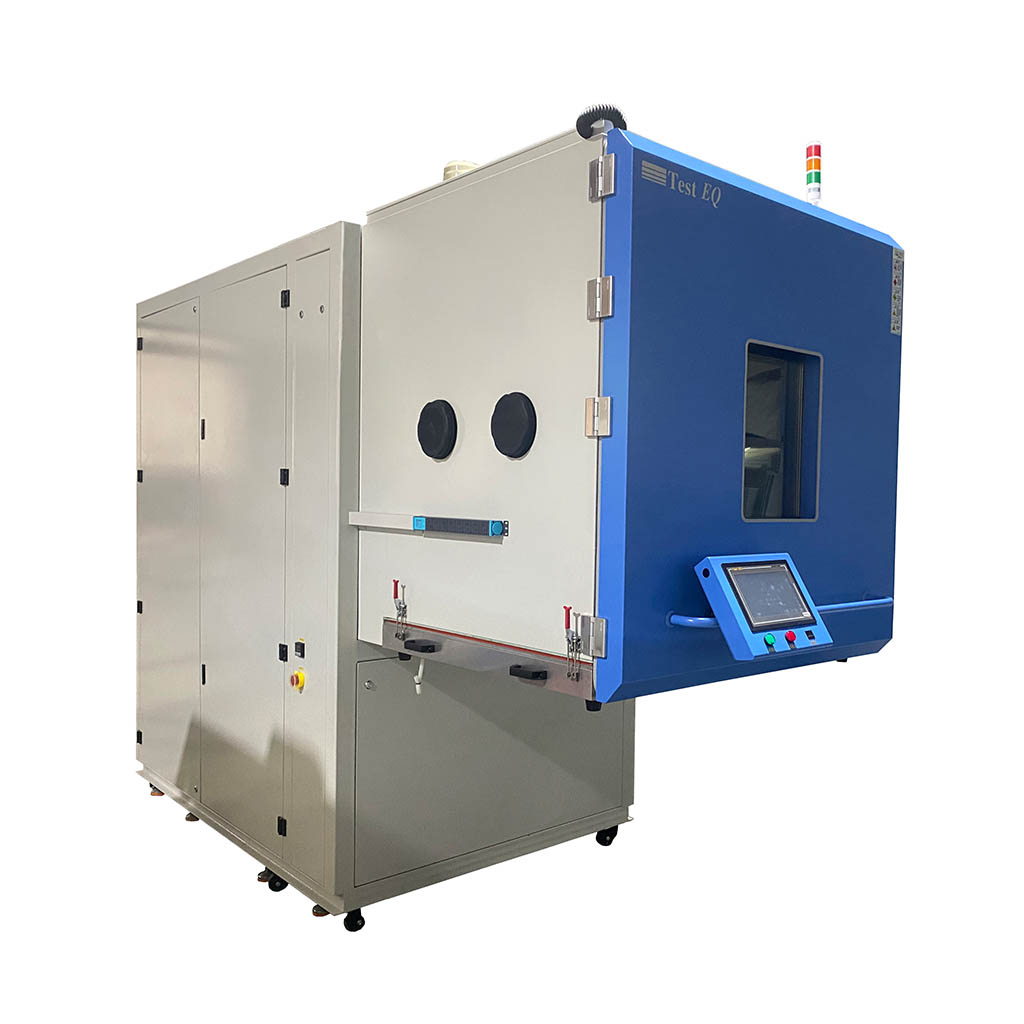
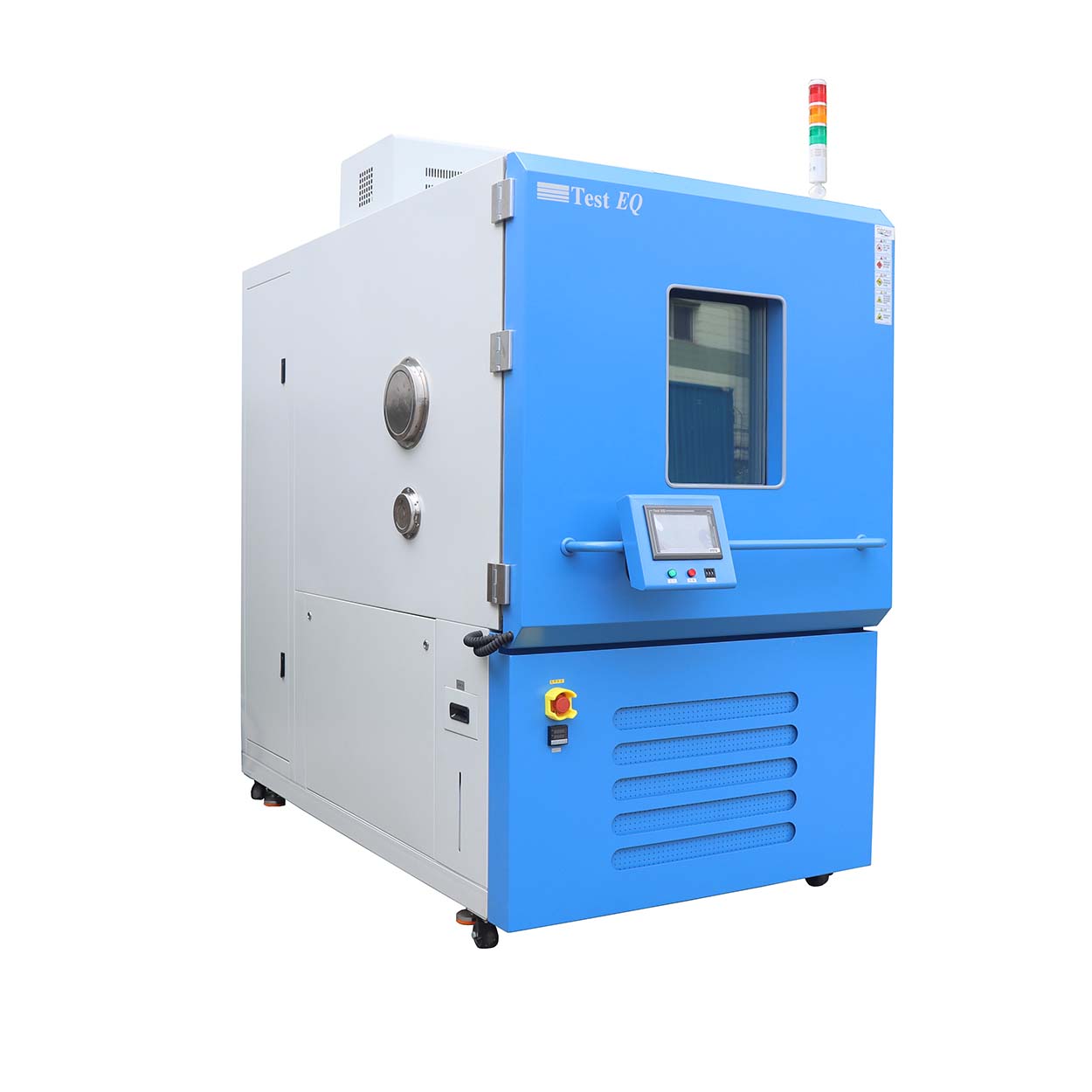
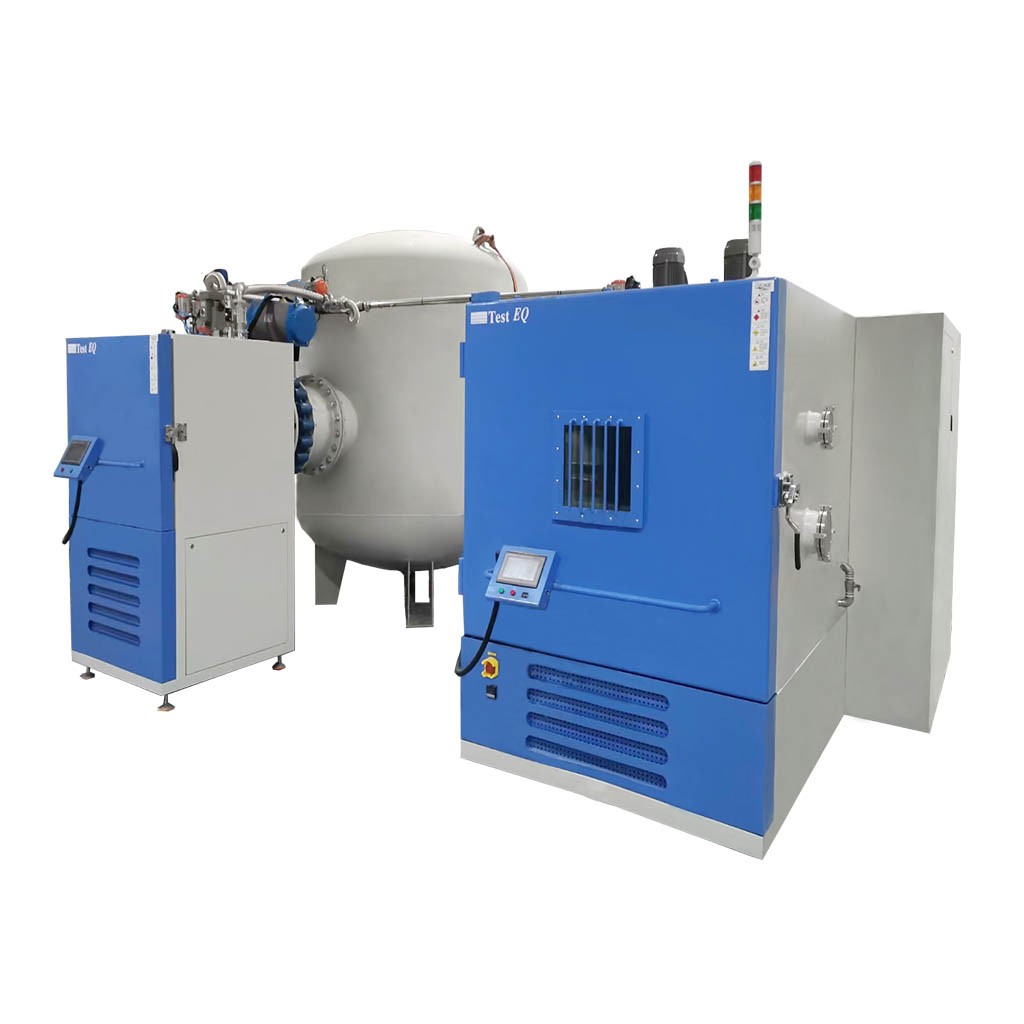
A temperature vibration test chamber combines an environmental temperature chamber with a vibration system.
The specimen remains under controlled temperature conditions while the shaker applies the specified mechanical excitation.
The purpose is to reproduce thermal-mechanical stress that may occur during actual operation or transportation.
Typical system elements include:
• Temperature-controlled chamber
• Electrodynamic shaker
• Vibration interface
• Product fixture
• Temperature controller
• Vibration controller
• Monitoring and safety systems
Why Combine Temperature and Vibration?
Temperature changes can alter material dimensions, stiffness, electrical characteristics and mechanical properties.
At the same time, vibration creates dynamic loading.
When these stresses occur together, the product may experience failure mechanisms that are difficult to reproduce through separate tests.
Combined testing can investigate:
• Thermal-mechanical fatigue
• Solder-joint degradation
• Connector instability
• Material mismatch
• Structural fatigue
• Mechanical loosening
• Cracking
• Component displacement
• Functional interruption
How Temperature Vibration Testing Works
A typical test sequence can include:
1. Stabilizing the specimen at the required temperature
2. Applying the defined vibration profile
3. Changing the chamber temperature according to the programmed profile
4. Monitoring product performance during vibration
5. Recording temperature, vibration and product data
6. Inspecting the specimen after testing
The exact sequence should follow the applicable qualification procedure.
Temperature Vibration Test Profiles
The chamber can be configured around different thermal and vibration requirements.
Temperature Cycling With Vibration
The specimen is exposed to repeated temperature changes while vibration is applied according to the defined profile.
Constant Temperature Vibration
The product is maintained at a defined temperature while mechanical vibration is applied.
Hot and Cold Vibration
The test may include separate hot and cold stages to evaluate mechanical behavior across a wide temperature range.
Programmable Thermal-Mechanical Profiles
Temperature and vibration sequences can be programmed to reproduce customer-specific qualification conditions.
Temperature Vibration Test vs. Thermal Cycling
These tests address different reliability questions.
| Factor | Thermal Cycling | Temperature + Vibration |
|---|
| Primary Stress | Temperature change | Temperature + mechanical loading |
| Main Mechanism | Thermal expansion / contraction | Thermal-mechanical interaction |
| Vibration | Not required | Required |
| Typical Concern | CTE mismatch | CTE mismatch + dynamic stress |
| Typical Equipment | Temperature Cycling Chamber | Temperature Vibration Test System |
Temperature vibration testing is appropriate when mechanical excitation is part of the product's expected operating environment.
Temperature Vibration vs Separate Testing Systems:
| Feature | Combined Temperature Vibration | Separate Thermal & Vibration Testing |
|---|
| Stress Accuracy | High | Medium |
| Test Duration | Shorter | Longer |
| Equipment Footprint | Compact | Larger |
| Reliability Detection | Higher | Lower |
How Engineers Select the System
Specimen Characteristics
Define:
• Product dimensions
• Product mass
• Mounting method
• Center of gravity
• Cable routing
• Fixture requirements
Temperature Requirements
Define:
• Minimum temperature
• Maximum temperature
• Ramp rate
• Dwell time
• Number of cycles
Vibration Requirements
Define:
• Frequency
• Acceleration
• Displacement
• Force
• Axis
• Vibration duration
• Random or sinusoidal profile
System Compatibility
The chamber, shaker and fixture must be designed as a compatible system.
The internal chamber dimensions must also allow sufficient space for specimen installation, airflow and vibration interfaces.
Why Choose TestEQ for Temperature Vibration Testing?
Integrated Temperature and Vibration Testing
TestEQ combines controlled temperature conditions with mechanical vibration in one coordinated testing system.
Designed for Thermal-Mechanical Reliability
The system is engineered to evaluate products exposed to simultaneous thermal variation and dynamic mechanical stress.
Wide Temperature Capability
Configurations can support demanding temperature profiles, including applications requiring temperatures from approximately -70°C to +180°C.
Flexible Vibration Integration
Electrodynamic shaker systems, interfaces and fixtures can be configured according to the required vibration profile and specimen characteristics.
Customized Chamber Engineering
Chamber dimensions, shaker interfaces, fixtures, temperature performance and control functions can be adapted to specific product and laboratory requirements.
Standards-Oriented Configuration
TestEQ systems can be configured around applicable IEC 60068, MIL-STD-810H, RTCA DO-160, ISO 16750 and customer-specific qualification requirements.
Engineering Support from Specification to Delivery
TestEQ supports equipment selection based on the actual temperature profile, vibration conditions, specimen dimensions, payload and test procedure rather than relying only on standard chamber models.
Optional Configurations:
Multi-zone temperature control for complex profiles
Extended vibration frequency and acceleration ranges
Remote monitoring and IoT integration
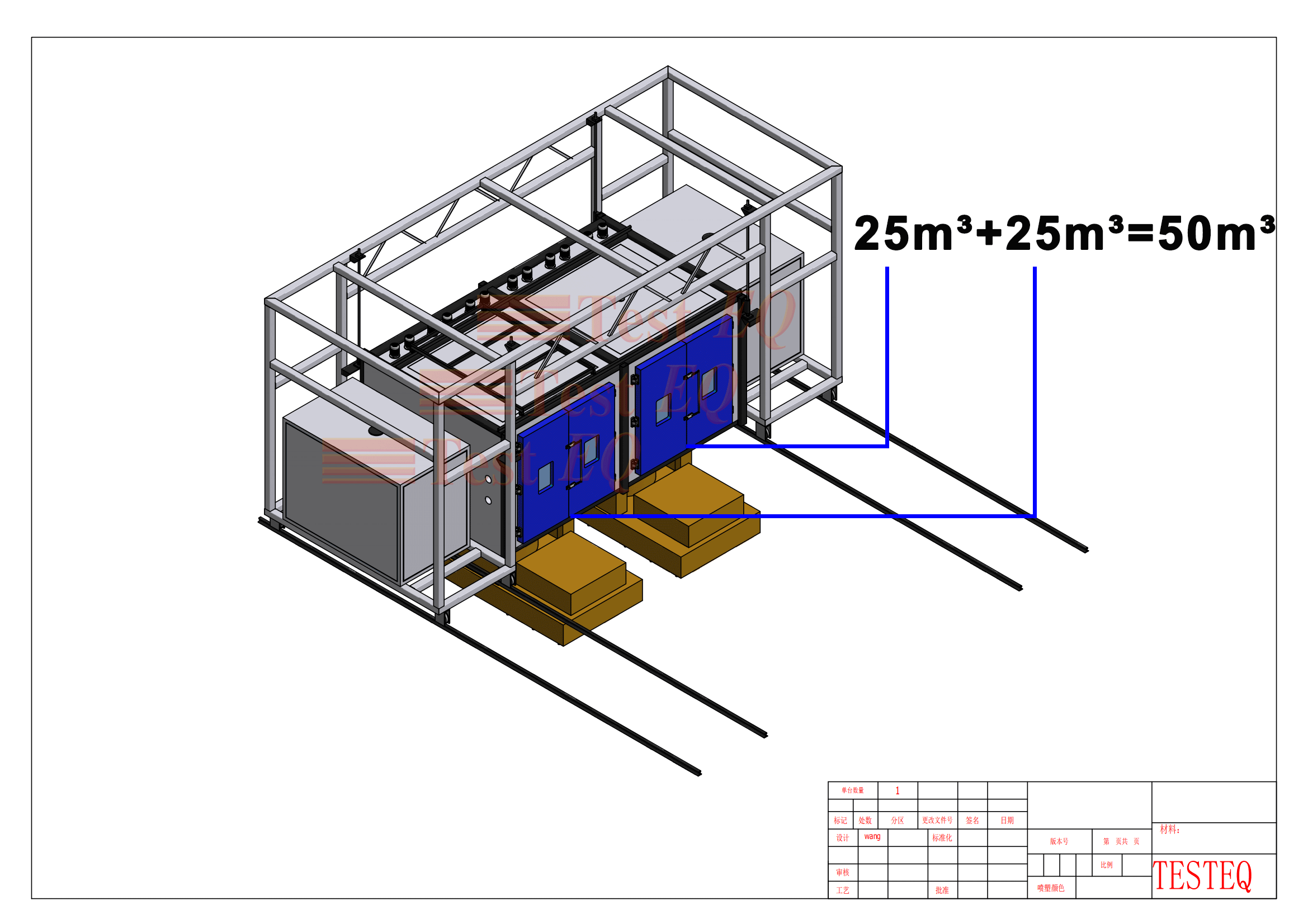
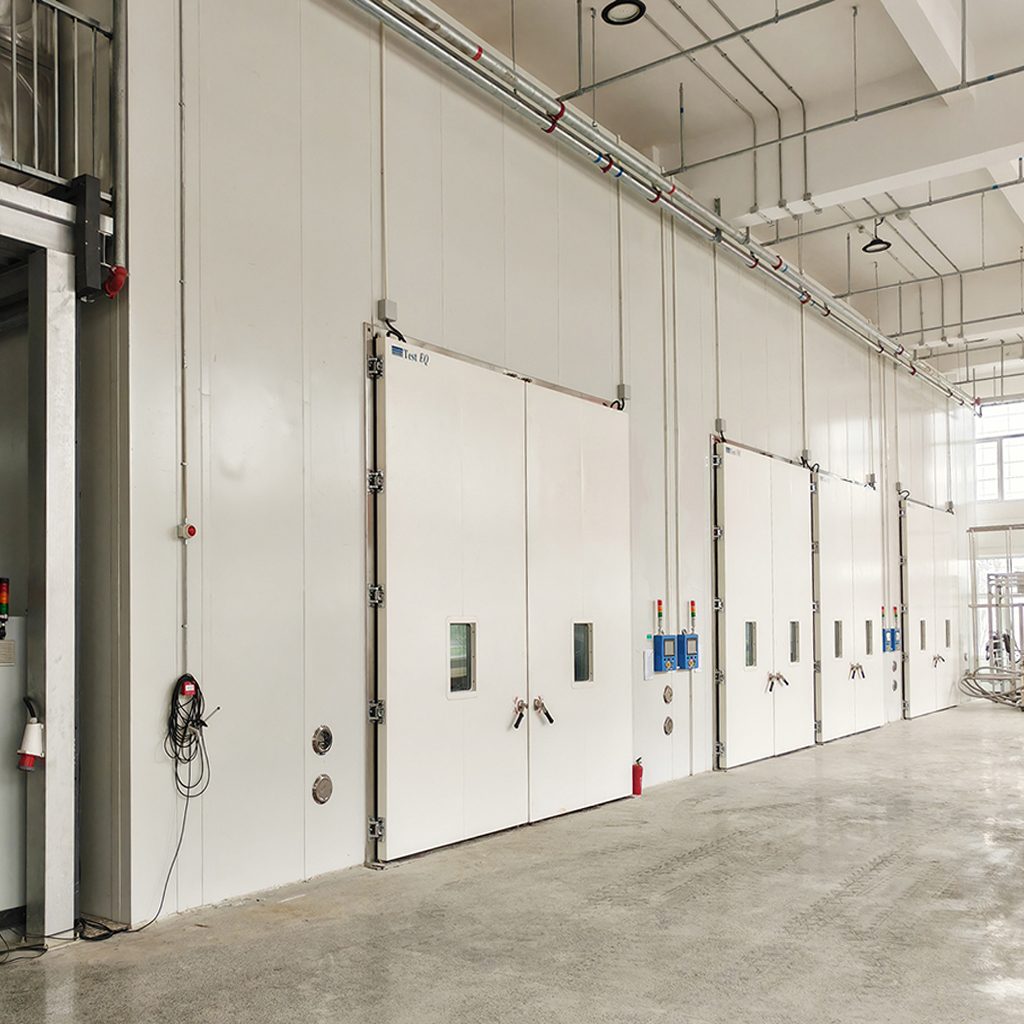
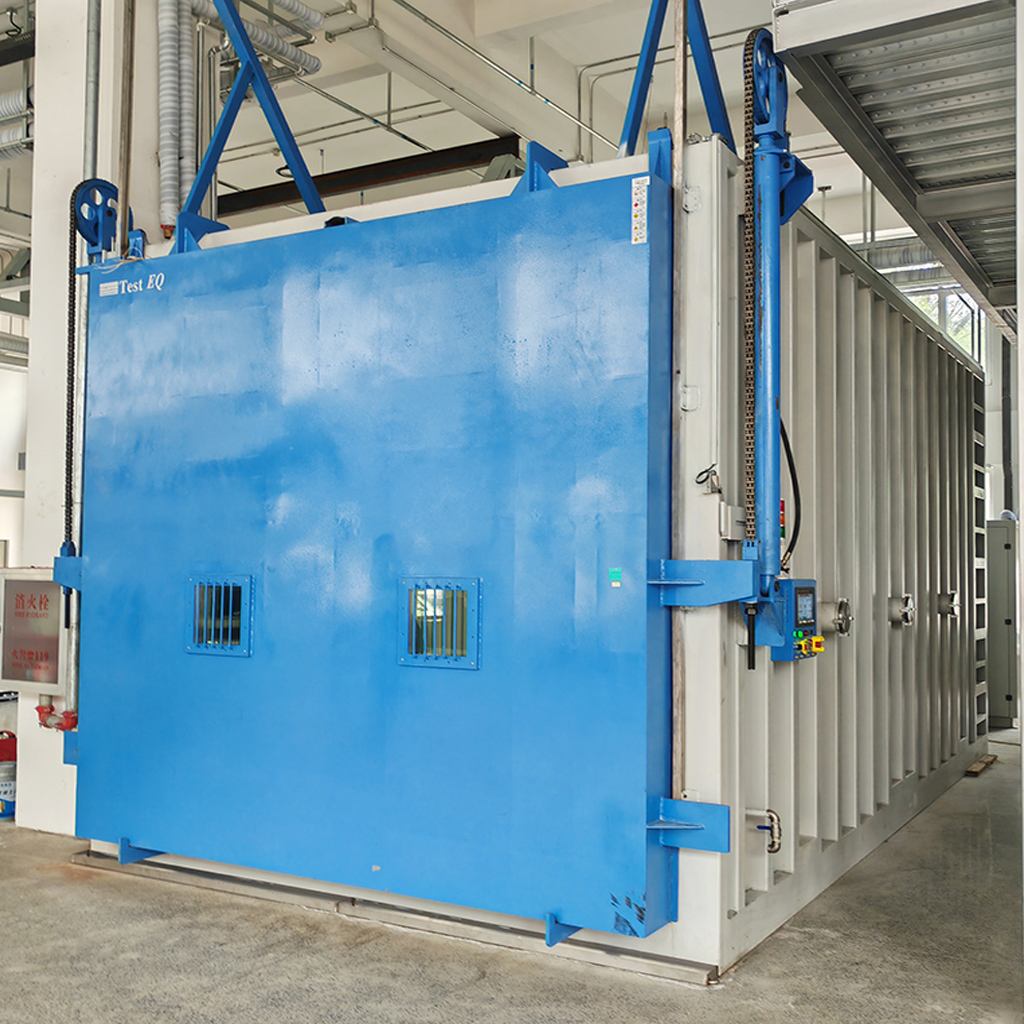
Large-volume chambers for full assembly testing
LN2 cooling for extreme low temperatures
Applicable Standards:
An international standard series for environmental testing, defining procedures to evaluate how products perform under thermal, mechanical, and climatic stress conditions. It is widely used for general industrial and electronic product qualification.
A U.S. military standard that specifies environmental engineering considerations and laboratory test methods, including temperature variation and vibration testing, to simulate real-world operational and transportation conditions in defense and aerospace applications.
A reliability testing standard developed by JEDEC for semiconductor devices. It defines test methods to evaluate package integrity, thermal fatigue, vibration resistance, and long-term operational reliability of electronic components.
Verification Methods for Environmental Testing Equipment Parameters (Temperature)
Basic Environmental Testing Procedures (Test A: Low Temperature)
Basic Environmental Testing Procedures (Test B: High Temperature)
Damp Heat Testing Methodology
Military Equipment Environmental Tests (High Temperature)
Temperature Vibration Test Chamber: Specifications, Applications and FAQs:
1.What is thermal vibration testing?
Thermal vibration testing evaluates a product while controlled temperature conditions and mechanical vibration are applied together.
2.Why combine temperature and vibration?
The combination can reproduce thermal-mechanical stress that may not be visible when the two stresses are evaluated separately.
3.Can temperature cycling be combined with vibration?
Yes. Temperature cycling profiles can be coordinated with vibration profiles according to the qualification procedure.
4.What temperature range is available?
Typical configurations can support approximately -70°C to +180°C, depending on chamber design and application requirements.
5.Can random vibration be used?
Yes. Random vibration can be configured when the selected shaker and control system meet the required test profile.
6.Can TestEQ customize the chamber?
Yes. Chamber dimensions, shaker interfaces, fixtures, temperature performance and control functions can be customized.
7: What types of product failures can be detected by this testing system?
It is commonly used to identify solder joint fatigue, PCB cracking, connector loosening, semiconductor package delamination, and vibration-induced microfractures under thermal stress conditions.
8: Can this system be integrated with automated data acquisition systems?
Yes, modern temperature vibration test chambers can integrate with DAQ systems for real-time monitoring of temperature profiles, vibration response, and failure points, enabling advanced reliability analysis and traceability.
Internal Linking Module
Recommended Equipment
Environmental vibration testing systems for mechanical qualification, with configurable shaker integration and environmental conditioning.
Combines temperature, humidity and vibration for multi-stress environmental reliability and AGREE testing.
Integrates temperature, humidity, vibration and altitude simulation for complex aerospace and high-reliability testing.
Related Testing Standards
International environmental testing methods covering temperature, vibration and other climatic and mechanical stresses.
A widely used defense and aerospace testing framework covering vibration, temperature and combined environmental conditions.
Aerospace testing standard covering environmental conditions and qualification requirements for airborne equipment.
Related Resources
Learn how a three-comprehensive vibration test chamber enables simultaneous temperature, humidity, and vibration testing for UAV structural durability and flight reliability validation.
A practical guide covering major EV battery testing standards including UN38.3, IEC 62660, SAE J2464, and ISO 16750, helping engineers select the right environmental validation methods.